inquiry
Leave Your Message

How to Choose the Right Logistics Container Mold?

Choosing the right Logistics Container Mold is a production decision, not merely a tooling purchase. A container may travel from a factory floor to a crowded warehouse, then endure repeated stacking, vibration, moisture, and temperature changes. Small design errors become visible quickly.

UNCTAD’s Review of Maritime Transport reports that over 80% of global merchandise trade moves by sea. This statistic highlights the need for containers that remain stable through long, demanding supply chains. The World Bank’s 2023 Logistics Performance Index, based on feedback from logistics professionals in 139 economies, also emphasizes reliability, timeliness, and shipment quality. Your mold must support all three.

Start with the container’s real operating conditions. Confirm the resin, recycled-content ratio, wall thickness, payload, stacking height, and expected drop impact. Then examine cavity balance, cooling-channel layout, ejection force, cycle time, and steel selection. A well-designed mold should produce consistent dimensions, smooth corners, strong handles, and dependable nesting. These details affect warehouse space and labor every day.

Experience also suggests inspecting maintenance access before approving the mold. Technicians need reachable inserts, replaceable wear parts, and clear inspection points. Otherwise, a minor flash issue can interrupt a large production run. No mold is perfect. Early prototypes may reveal warpage that computer simulations miss. That is not failure; it is useful evidence.

This guide explains how to compare suppliers, validate trial samples, estimate total ownership cost, and select a Logistics Container Mold that performs beyond the first shipment. The cheapest quotation may not be the safest investment. Reliability deserves measurable proof.
How to Choose the Right Logistics Container Mold?

Define the Logistics Container’s Purpose and Operating Conditions

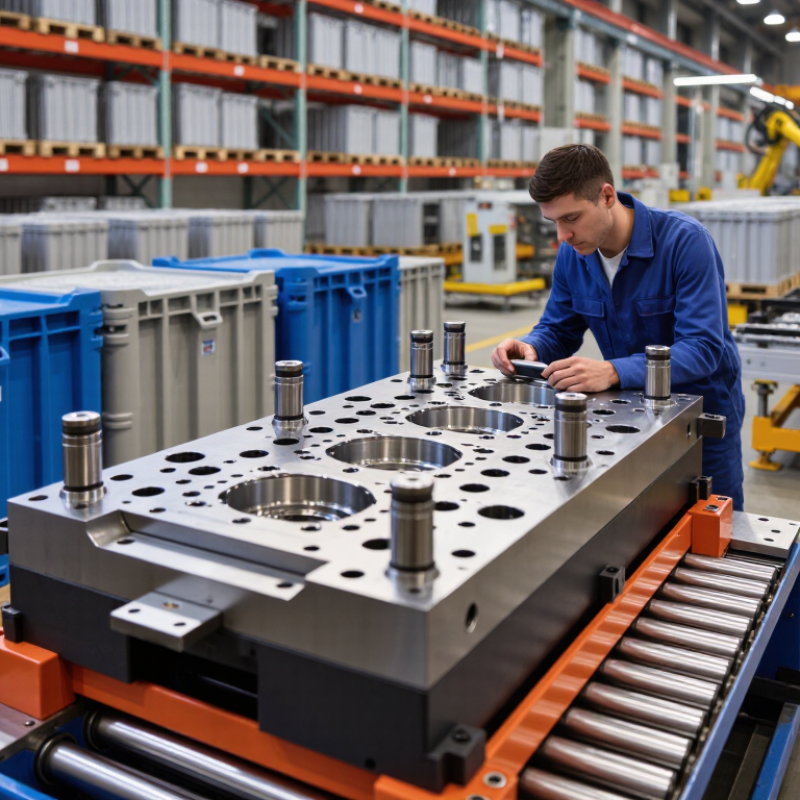
A logistics container mold should begin with the container’s real purpose, not its appearance. A box for warehouse storage faces different demands than one used for repeated truck loading. Define the product, handling method, and expected service life. Will workers carry it manually, move it with a forklift, or place it on automated conveyors? These details affect the container’s dimensions, grip areas, base strength, and wall structure.

Operating conditions must be measured in practical terms. Record the expected load, stacking height, impact frequency, temperature range, moisture exposure, and cleaning method. A container used in a cold warehouse may become more brittle. A container exposed to oil or frequent washing may need a different material choice. Mold design should also support consistent wall thickness, smooth ejection, and suitable reinforcement ribs. Small design errors can create weak corners or difficult release.

In production work, I have seen attractive prototypes fail after repeated stacking. The problem was not the outer shape. It was an underestimated load cycle. That mistake is worth remembering. Test filled containers under realistic stacking and handling conditions before finalizing the mold. Check deformation, lid fit, base wear, and worker comfort. Keep clear records of test results and design changes. A reliable mold comes from matching the container to its daily environment, even when that means revising an appealing first concept.
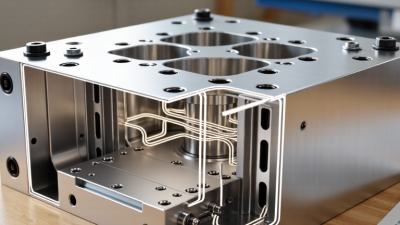
Compare Mold Materials, Designs, and Manufacturing Methods

How to Choose the Right Logistics Container Mold?

Compare Mold Materials, Designs, and Manufacturing Methods

Mold Materials

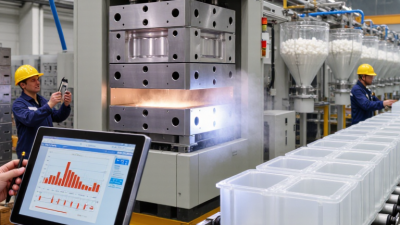
Choosing a logistics container mold starts with its production demands. Mold steel offers strength for high-volume cycles and repeated pressure. Aluminum costs less and machines faster, but it usually wears sooner. Stainless steel can resist corrosion in humid workshops. The best choice depends on resin, cycle count, container size, and maintenance plans. I have seen teams select hard steel too early. It increased machining time without improving container quality.

Mold Design

Mold design affects every container detail. Uniform wall thickness helps reduce warping and uneven cooling. Rounded corners lower stress during stacking and transport. Proper draft angles support clean ejection from the cavity. Ribs add strength, but excessive ribs can trap heat and create sink marks. Cooling channels should follow thick sections closely. Small vents also matter. Without them, trapped air may cause burns or short shots. A perfect first design is rare.

Manufacturing Methods

Manufacturing methods should match the required accuracy. CNC machining suits most cavity shapes and provides reliable dimensional control. Electrical discharge machining helps form narrow grooves and sharp details. Polishing improves surface release and appearance. For complex molds, simulation can reveal filling problems before cutting begins. Trial production remains essential. Measure wall thickness, stacking alignment, weight, and deformation after cooling. Some defects only appear after several production cycles. That lesson is easy to overlook. Clear inspection records also improve future repairs and design revisions.

Evaluate Size, Strength, Precision, and Production Requirements

How to Choose the Right Logistics Container Mold?

Choosing a logistics container mold starts with accurate size evaluation. Measure length, width, height, stacking clearance, and corner geometry. A box may fit the drawing but fail on a warehouse pallet. Check wall thickness carefully. Uneven walls can cause weak corners, warping, or unstable stacking. Do not trust appearance alone.

Strength depends on payload, repeated handling, and environmental conditions. Specify the expected load, drop frequency, and temperature range. Inspect the mold structure, guide systems, cooling channels, and locking surfaces. Precision matters too. Small dimensional errors can prevent lids from closing or containers from nesting correctly. Practical mold reviews should include sample measurements, not only promised tolerances. A perfect design on paper may still produce flash or shrinkage. That risk deserves honest discussion.

Tips: Request a dimensional inspection report before approval. Test a sample under realistic stacking conditions. Review cycle time, cooling balance, and maintenance access. Leave space for reasonable adjustments. Some production assumptions will be wrong; pilot testing can reveal them early. Record defects by location, not just by quantity. This helps engineers connect warping with cooling or material flow. Consider future volume as well. A low-cavity mold may suit small orders, but it can restrict output later.

How to Choose the Right Logistics Container Mold? - Evaluate Size, Strength, Precision, and Production Requirements

Container Application Typical External Size
(L × W × H)
Typical Load
Requirement
Recommended Mold Configuration Indicative Wall Thickness Key Strength Features Critical Precision Requirements Suitable Production Volume
Small Parts Bin 300–400 × 200–300 × 100–200 mm 5–15 kg per bin Single-cavity injection mold; interchangeable inserts preferred 1.5–2.5 mm Reinforced rim, stable base, rounded internal corners Consistent nesting or stacking profile; dimensional tolerance typically ±0.3–0.5 mm Low to medium volume; approximately 10,000–100,000 pieces per year
Medium Stackable Tote 400–600 × 300–400 × 200–350 mm 15–35 kg per tote Multi-cavity injection mold for repeat production; hydraulic or mechanical core pulls as required 2.0–3.0 mm Vertical ribs, reinforced handles, load-bearing stacking rim Accurate rim alignment and flat base; tolerance typically ±0.3–0.6 mm Medium to high volume; approximately 50,000–500,000 pieces per year
Heavy-Duty Stackable Crate 600–800 × 400–600 × 250–450 mm 30–70 kg per crate Large single-cavity mold with robust guide pillars, replaceable wear components, and balanced cooling 2.5–4.0 mm Heavy ribbing, reinforced corners, anti-deformation stacking lugs Uniform wall distribution and low base warpage; tolerance typically ±0.5–0.8 mm Medium to high volume; approximately 20,000–200,000 pieces per year
Nestable Distribution Crate 400–600 × 300–400 × 250–400 mm 15–40 kg per crate Precision injection mold with collapsible or moving features where nesting geometry requires undercuts 2.0–3.5 mm Tapered sidewalls, reinforced nesting stops, controlled corner radii Consistent nesting depth and release angle; tolerance typically ±0.3–0.6 mm Medium to high volume; approximately 50,000–300,000 pieces per year
Large Bulk Container 800–1,200 × 600–1,000 × 500–1,000 mm 100–500 kg, depending on contents and design Large-format single-cavity mold; require high rigidity, advanced cooling, and careful filling analysis 3.5–6.0 mm Deep structural ribs, thick load paths, reinforced lifting or fork-access areas Control of warpage, parallelism, and base flatness; tolerance typically ±0.8–1.5 mm Low to medium volume; approximately 2,000–50,000 pieces per year
Pallet-Size Bulk Box 1,000–1,300 × 800–1,200 × 700–1,200 mm 300–1,000 kg, subject to design validation Heavy-duty large mold or modular mold system; requires high-tonnage press compatibility 4.0–8.0 mm Integrated pallet feet, reinforced corners, high-load stacking frame Pallet footprint, foot alignment, base flatness, and stacking clearance are critical Low to medium volume; approximately 1,000–20,000 pieces per year
Engineering note: The dimensions, wall-thickness ranges, load levels, and tolerances shown are typical preliminary design values for reusable plastic logistics containers. Final mold specifications should be verified through material selection, stacking and drop testing, finite-element analysis, mold-flow analysis, machine-tonnage checks, cooling analysis, and applicable handling requirements.

Assess Mold Costs, Maintenance, Lifespan, and Supplier Capability

Choosing a logistics container mold starts with total cost, not the lowest quotation. Mold steel, machining, hot-runner parts, sampling, and spare inserts form the initial cost. Maintenance adds cleaning, cooling-channel checks, alignment inspections, and cavity repairs. A mold with replaceable wear inserts may cost more, yet reduce future downtime. The PlasticsEurope report Plastics—the Fast Facts 2023 recorded 400.3 million tonnes of global plastics production in 2022. That scale reinforces a practical point: material selection and processing stability strongly affect long-term waste. Recycled resin can lower material impact, but its flow and contamination levels may vary.

Lifespan must be linked to cycle targets, resin grade, wall thickness, and handling conditions. Do not accept “one million cycles” without test evidence. Request cycle logs, dimensional reports, cooling-flow results, and a clear warranty. ISO 20457:2018 provides useful guidance for tolerances in moulded plastic parts. Supplier capability also matters. Check mold-flow analysis, steel certificates, machining accuracy, trial records, and after-sales response time. The World Bank’s Logistics Performance Index 2023 identifies reliability as a major logistics concern. A mold that causes inconsistent stacking can damage that reliability. The first estimate is often wrong. Recheck it.

Tips: Compare cost per usable cycle. Ask for critical spare parts. Inspect a trial container under real load. Keep maintenance records from day one. Avoid choosing by price alone.

Select and Validate the Best Mold for Reliable Container Production

How to Choose the Right Logistics Container Mold?

Select and Validate the Best Mold for Reliable Container Production

Choosing a logistics container mold starts with the container’s working conditions. Load capacity, stacking height, wall thickness, and resin type should guide every decision. Do not choose a mold from appearance alone. An attractive sample may hide weak corners, uneven cooling, or difficult ejection. Measure twice. Experienced mold engineers check parting lines, draft angles, gate positions, and steel hardness before approval. These details affect cycle time and long-term dimensional stability.

Validation should happen under realistic production settings, not only during a short workshop trial. Run the intended material at the planned injection speed, pressure, temperature, and cooling time. Inspect corner radii, handles, stacking feet, and base flatness after demolding. Small defects matter. Record warpage, sink marks, flash, ejection force, and cycle consistency across repeated shots. A dimensional report with calibrated tools provides stronger evidence than visual approval. Where possible, compare measurements from early, middle, and late trial cycles.

A reliable mold also needs maintainable cooling channels and accessible wear components. Ask how inserts, ejector pins, and cavity surfaces can be replaced without major downtime. One overlooked detail can delay delivery. In practice, mold selection is a compromise between purchase cost, output speed, and repair risk. We once treated a minor draft issue as harmless; production later proved otherwise. That lesson remains useful: approve the mold only after the container performs consistently, not just once. Document accepted tolerances before regular production begins.