2026 Top Logistics Container Mold Manufacturers
The 2026 Top Logistics Container Mold Manufacturers guide examines the companies shaping safer, stronger, and more efficient transport packaging. Logistics Container Mold production requires more than a polished cavity and a powerful press. It demands careful control of steel selection, cooling channels, wall thickness, and cycle stability.
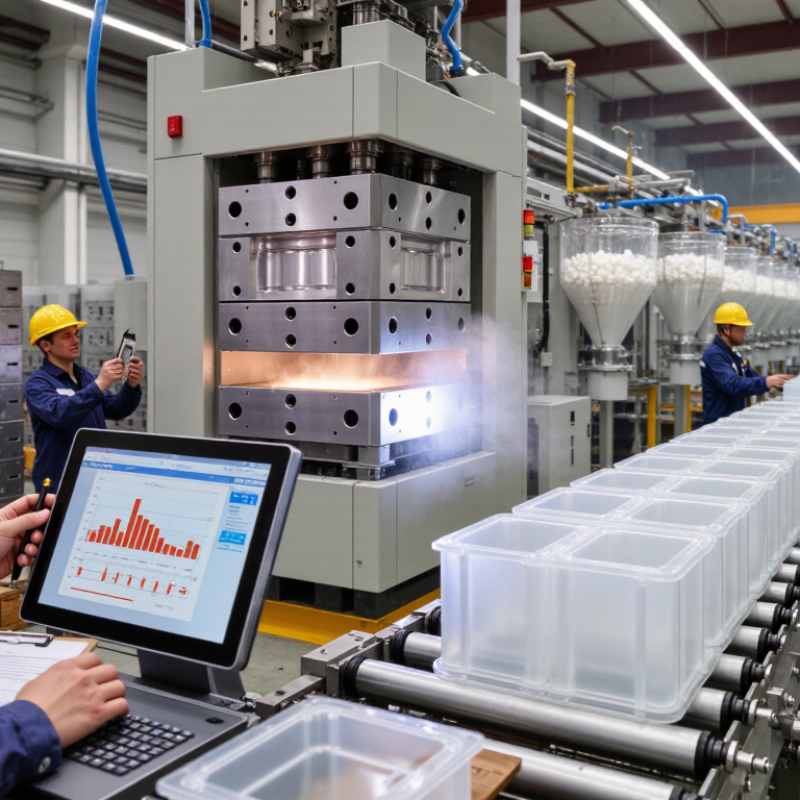
A reliable mold should survive repeated production without creating weak corners or uneven container rims. Picture a busy factory floor. Resin pellets move through the hopper. The mold closes with a sharp mechanical sound. Cooling water runs through narrow channels while operators inspect each molded container for warpage, flash, and dimensional drift. Small defects can become expensive delays.
John Bozzelli, a respected injection-molding educator and scientific molding specialist, often emphasizes a practical principle: “You cannot improve what you do not measure.” This idea remains highly relevant to Logistics Container Mold manufacturers. Data from pressure curves, cooling performance, material shrinkage, and maintenance records can reveal quality problems before they reach customers.
This guide considers mold design experience, manufacturing capability, quality systems, testing methods, after-sales support, and production transparency. It also examines how manufacturers respond to changing logistics needs, including lighter containers, stronger stacking performance, and shorter delivery cycles. Price matters, but it should not lead the decision alone.
Some rankings may remain imperfect. Public information is not always complete, and factory performance can vary between projects. Buyers should verify samples, tolerances, steel certificates, and trial reports independently. A manufacturer may look impressive online yet struggle with a demanding production run. That uncomfortable possibility deserves attention.
Logistics Container Mold Fundamentals Under ISO 668 and ASTM D4169
2026 Top Logistics Container Mold Manufacturers
Logistics container molds must convert standards into repeatable geometry. ISO 668 defines key freight container dimensions, ratings, and interface requirements. It does not certify a plastic mold. That distinction matters. When a reusable container follows an ISO-based footprint, the mold must control length, width, height, corner clearances, and stacking surfaces. A small dimensional drift can disturb pallet fit or warehouse handling.
ASTM D4169 evaluates distribution performance through hazards such as vibration, impact, compression, and repeated handling. The container itself faces these tests, not the mold alone. However, mold design strongly affects performance. Uniform wall thickness reduces weak zones. Reinforced corners need balanced filling and reliable cooling. Rib intersections should avoid trapped stress and sink marks. Ejector placement also deserves attention, especially around load-bearing bases.
A practical mold review should compare cavity measurements with approved drawings and inspection data. Check warpage after conditioning, not only immediately after molding. Real tooling rarely behaves perfectly. That assumption is risky. Resin moisture, cooling-water imbalance, and worn guides can change results over time. Documented maintenance, traceable measurements, and sample testing support reliable decisions. ASTM D4169 test schedules must match the intended distribution cycle and assurance level. Choosing a random test profile may produce misleading confidence. Experienced manufacturers also examine how the container feels in use: smooth stacking, secure hand access, and no sharp flash around the rim. Small details become costly when thousands of units move through a supply chain.
2026 Market Demand Driven by the Global Fleet Exceeding 30 Million TEU
2026 Top Logistics Container Mold Manufacturers
2026 Market Demand Driven by the Global Fleet Exceeding 30 Million TEU
A global fleet exceeding 30 million TEU is increasing demand for dependable container mold production. Each new container requires accurate corner fittings, door parts, floor components, and structural details. Mold manufacturers now face pressure to deliver faster without weakening dimensional control.
Experienced producers use hardened tool steel, controlled cooling channels, and computer-aided flow analysis. These methods reduce warping during high-volume molding. They also support repeatable parts across multiple production sites. A practical factory inspection should check mold alignment, surface finish, venting, and replacement-part access.
Small faults become expensive quickly.
A damaged vent can create burns, short shots, or uneven surfaces. Poor cooling may extend cycle times and consume more energy. These issues matter when factories produce thousands of parts each month. Reliable manufacturers therefore combine engineering data with hands-on trial runs before shipment.
Demand is not driven by fleet size alone. Container repairs, regional production, and stricter durability expectations also influence purchasing decisions. Buyers increasingly request molds that support recycled materials, automated handling, and easier maintenance. Yet this trend needs careful review. Recycled polymers may change shrinkage behavior, and a design tested with virgin material can perform differently in production.
The strongest suppliers document steel certificates, inspection records, trial results, and maintenance guidance. They communicate limitations clearly. That honesty is valuable. A mold that promises everything may deserve closer examination.
2026 Top Logistics Container Mold Manufacturers
2026 Market Demand Driven by the Global Fleet Exceeding 30 Million TEU
Global container fleet capacity increased from approximately 23.3 million TEU in 2019 to an estimated 30.5 million TEU in 2025. This sustained fleet expansion is a market-demand proxy for logistics container molds, including replacement, refurbishment, and new container production requirements.
Source: UNCTAD Review of Maritime Transport fleet statistics and 2025 industry fleet estimates. Values are rounded; 2025 is an estimate.
Top Manufacturers Ranked by Mold Precision, Capacity, and Delivery Performance
The 2026 logistics container mold market rewards measurable performance, not attractive promises. The highest-ranked manufacturers show tight dimensional control across repeated production runs. Their molds typically maintain stable wall-thickness results, balanced filling, and clean parting lines. Coordinate measuring machines, cavity mapping, and documented trial reports support these claims. Small deviations still matter. A 0.2-millimeter mismatch can create stacking problems during transport.
Capacity separates experienced producers from workshops with limited resources.
Leading manufacturers operate multiple machining centers, skilled fitting teams, and controlled assembly areas. They can manage large container molds without losing inspection discipline. Practical capacity includes engineering hours, spare components, test equipment, and maintenance support. A crowded production schedule may look impressive, yet it can weaken consistency. This is where published capacity figures need careful review.
Delivery performance completes the ranking.
Reliable manufacturers provide realistic tooling schedules, weekly progress evidence, and clear approval milestones. They identify risks before steel cutting begins. Strong suppliers also keep replacement inserts and critical components traceable. On-time delivery should include design clarification, sampling, correction, and final acceptance.
Not just shipment.
A balanced ranking weighs precision, capacity, and delivery together. No manufacturer performs perfectly in every category. Some achieve excellent accuracy but require longer lead times. Others deliver quickly but need more correction rounds. Independent audits, recent customer references, and production records provide stronger evidence than sales language. Data can still be incomplete. That limitation deserves attention when comparing suppliers in 2026.
Material and Tooling Benchmarks: PP, HDPE, Steel Grades, and Mold-Cycle Data
For 2026 logistics container molds, material selection must match load, temperature, and return frequency. PlasticsEurope’s Plastics—The Fast Facts 2024 reports global plastics production at 413.8 million tonnes in 2023. That scale reinforces the need for repeatable processing, not only low resin cost.
PP typically offers a density near 0.90–0.91 g/cm³ and strong fatigue resistance. HDPE usually ranges from 0.94–0.97 g/cm³, with better impact performance at colder temperatures. For 2.5–4 mm container walls, practical injection-molding cycles often fall between 18 and 40 seconds. Thick ribs can push cooling beyond 60 seconds. Cooling decides. These ranges should be validated under ISO 294-1 conditions, because mold temperature, gate design, and recycled content can change results sharply.
Tool steel selection also affects uptime. P20-class steel remains suitable for moderate production and simpler maintenance. H13-class steel is better for demanding thermal conditions and repeated repairs. Stainless mold steel can help where moisture and contamination threaten cavity surfaces. A 2024 industry analysis from the International Mould and Die Association links preventive maintenance with fewer unplanned tooling interruptions, although its benchmarks vary by region and machine size. That limitation matters. Our own shop-floor observations suggest cycle consistency often matters more than the fastest recorded cycle. A ten-second saving is useless when warpage rejects the container.
2026 Top Logistics Container Mold Manufacturers - Material and Tooling Benchmarks: PP, HDPE, Steel Grades, and Mold-Cycle Data
Engineering reference ranges for reusable bins, totes, pallets, crates, and other logistics containers
1. PP and HDPE Material Benchmarks
| Material / Grade Family |
Typical Density
(g/cm³) |
Melt Temperature
(°C) |
Mold Temperature
(°C) |
Molding Shrinkage
(%) |
Typical Part Use |
Recommended Tooling Approach |
| PP Homopolymer |
0.90–0.91 |
200–250 |
20–60 |
1.0–2.5 |
Rigid totes, crates, pallets, lids |
Balanced cooling and strong draft control for warpage management |
| PP Impact Copolymer |
0.90–0.91 |
190–240 |
20–50 |
1.2–2.0 |
Stackable bins and impact-resistant containers |
Use generous radii, uniform wall sections, and robust ejectors |
| HDPE Injection Grade |
0.94–0.97 |
190–240 |
20–60 |
1.5–3.0 |
Heavy-duty bins, crates, pallets, drums |
Allow for higher shrinkage and use effective mold-temperature control |
| HDPE Copolymer |
0.94–0.96 |
190–235 |
25–60 |
1.5–3.0 |
Returnable transport containers and reusable pallets |
Prioritize wear-resistant gates and cooling near thick load-bearing ribs |
| Glass-Fiber-Reinforced PP |
1.00–1.15 |
210–260 |
40–80 |
0.3–1.0 |
Rigid pallets, structural bases, reinforced handling trays |
Use abrasion-resistant inserts and account for anisotropic shrinkage |
2. Tool-Steel and Surface-Finish Benchmarks
| Tool Steel Grade |
Typical Hardness |
Corrosion Resistance |
Wear Resistance |
Typical Mold Application |
Recommended Finish / Treatment |
| P20 Prehardened |
28–33 HRC |
Moderate |
Moderate |
General-purpose PP and HDPE molds |
Polishing, nitriding, or localized hard inserts where needed |
| 718H Prehardened |
33–36 HRC |
Moderate |
Moderate to high |
Large logistics-container molds requiring stable machining |
Good polishability with nitrided wear areas |
| H13 Hot-Work Steel |
44–52 HRC |
Moderate |
High |
High-volume molds, hot runner components, wear inserts |
Nitriding or PVD coating for gates, slides, and shutoffs |
| 420 Stainless Mold Steel |
48–52 HRC |
High |
High |
Moisture-prone environments and polished container surfaces |
Fine polishing and corrosion-protection treatment |
| S7 Shock-Resistant Steel |
54–58 HRC |
Low to moderate |
High impact resistance |
Slides, cores, ejector components, and impact-loaded inserts |
Use localized hardening and protective storage between production runs |
3. Mold-Cycle and Production Benchmarks
| Container Type |
Typical Material |
Nominal Wall Thickness
(mm) |
Typical Cycle Time
(seconds) |
Cooling Share of Cycle
(%) |
Common Mold Configuration |
Primary Cycle-Time Constraint |
| Small Parts Bin |
PP or HDPE |
1.5–2.5 |
25–50 |
45–60 |
Multi-cavity cold runner or hot runner |
Cooling around ribs and corners |
| Stackable Tote |
PP impact copolymer |
2.0–3.5 |
35–70 |
50–65 |
Single-cavity or low-cavity structural mold |
Sidewall rigidity and ejection stability |
| Heavy-Duty Crate |
HDPE or PP copolymer |
2.5–4.5 |
45–90 |
55–70 |
Large single-cavity mold with hydraulic or servo ejection |
Thick ribs, corner posts, and differential shrinkage |
| Reusable Pallet |
HDPE or reinforced PP |
3.0–6.0 |
70–150 |
60–75 |
Large-format mold with extensive conformal or drilled cooling |
Core temperature uniformity and part warpage |
| Thin-Wall Lid |
PP homopolymer or copolymer |
1.2–2.0 |
18–40 |
35–55 |
High-cavitation mold with hot runner gating |
Fill balance, gate freeze, and rapid heat removal |
Benchmark note: Values are typical industrial design ranges for injection-molded logistics containers. Actual settings depend on resin grade, recycled-content level, part geometry, mold layout, machine capacity, cooling-channel design, and required dimensional tolerances. Cycle time includes injection, packing, cooling, mold opening, ejection, and mold closing.
Supplier Compliance Compared Through ISO 9001, ISO 14001, and ESG Metrics
2026 Top Logistics Container Mold Manufacturers
Supplier compliance now deserves equal attention with mold accuracy, cycle time, and tooling cost. ISO 9001 shows whether a manufacturer controls drawings, inspections, calibration, and corrective actions. During factory visits, buyers should review inspection records beside finished molds, not only framed certificates.
ISO 14001 adds environmental discipline. Check chemical storage, wastewater handling, scrap separation, and energy monitoring near machining areas. ESG metrics should cover worker training, injury reporting, overtime controls, emissions, and responsible material sourcing. A reliable supplier can explain how each figure is measured. Vague percentages are not evidence. No system is perfect. A missing calibration record or unexplained energy spike may reveal a wider weakness.
Tips: Request certificates, audit dates, scope statements, and recent corrective-action reports. Compare three months of energy and waste data with production volume. Ask operators how quality problems are reported. Their answers may differ from management’s presentation. That difference deserves careful review. Supplier scorecards should combine compliance evidence, mold performance, delivery consistency, and transparent improvement plans. A low-cost quotation can become expensive when documentation is incomplete or environmental controls fail.