Choosing a Molded Pallet supplier involves more than comparing prices or product photos. Buyers need to match pallet design with the weight, dimensions, and handling conditions of their goods. A pallet that performs well in a dry warehouse may behave differently in cold storage, on a rough dock, or inside a tightly packed container. Small details matter.
This guide introduces ten manufacturers for global buyers to consider. It focuses on practical questions: available sizes, material options, load ratings, nesting or stacking design, and access to technical documentation. Some molded pallets use recycled materials, while others are designed for specific handling systems. Buyers should confirm each model’s specifications with the manufacturer and test samples in their own operations when possible. A catalog rating alone may not reflect repeated use, uneven loads, or local handling conditions.
Supplier capabilities can also vary by region. Production locations, lead times, customization, and export support may affect the real cost of a purchase. Certifications and test methods should be checked against the buyer’s needs rather than assumed from a product description. This comparison is a starting point, not a universal ranking; the best choice depends on the job. Even experienced teams can miss a detail. A careful review can help narrow the options before requesting quotes and samples.
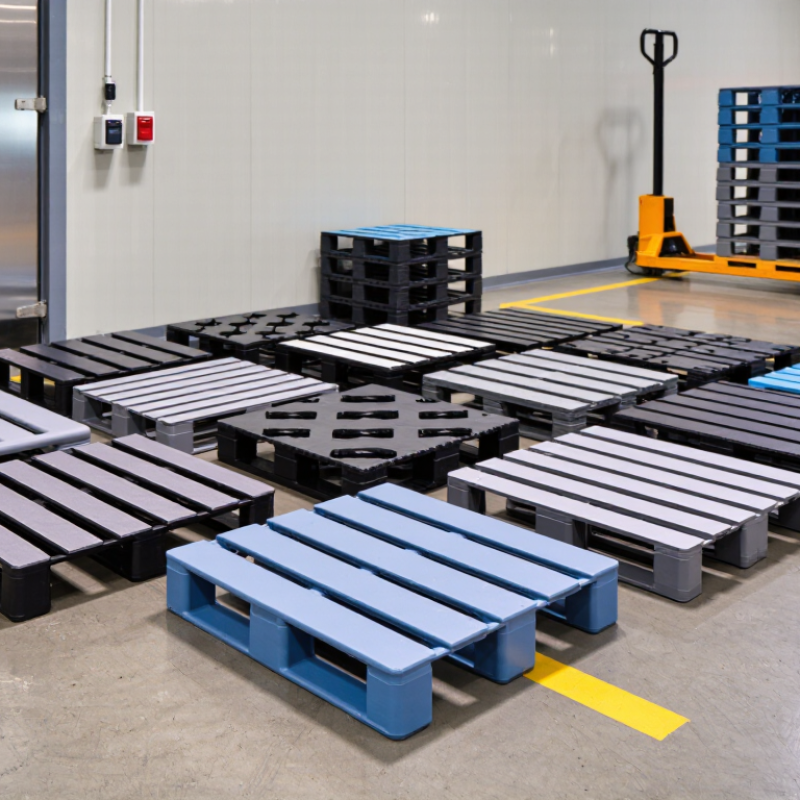
Molded pallets are formed by compressing wood fibers, often recovered from manufacturing waste, into a single shaped platform. Unlike conventional wood pallets assembled from separate deck boards and stringers, they have no loose nails or boards to snag stretch wrap. Many designs nest when empty, reducing storage space and return-shipping volume. They are not identical. Material, load rating, and resistance to moisture vary by design, so “molded” alone does not guarantee performance.
The Virginia Tech/National Wooden Pallet and Container Association 2016 U.S. pallet-industry survey estimated about 1.8 billion pallets in service across the country. That figure describes the broader pallet pool, not molded pallets specifically, but it shows why fit and handling matter. Compared with repairable wooden pallets, molded units can be harder to fix if cracked; compared with reusable plastic pallets, their durability depends more heavily on construction and use conditions. ISO 8611 provides test methods for assessing pallet performance, including strength and stiffness. Ask suppliers for test results that match your actual load and racking setup.
Tips: Check the rated dynamic and static loads, then test a sample with your product. A snug fit matters. Measure fork openings, conveyor clearances, and stacked height before ordering. Data sheets do not capture every rough landing or damp warehouse corner; real handling trials can reveal awkward surprises.

Top 10 Molded Pallet Manufacturers for Global Buyers
Criteria for Evaluating Molded Pallet Manufacturers
Start with the pallet’s real job: load weight, handling equipment, storage conditions, and shipping distance. A pallet used on a warehouse rack faces different demands from one moved by hand or stacked outdoors. Share these details with potential manufacturers before comparing quotes.
Ask how load ratings are established and whether they distinguish static, dynamic, and racking loads. Request test methods, dimensional tolerances, and inspection records—not just a product sheet. Details matter. Check sample pallets for uneven feet, sharp edges, or deck surfaces that could catch wrapping. A small defect can disrupt automated handling, but appearance alone does not prove strength.
Manufacturing consistency also matters. Ask how incoming material and production batches are checked, and whether recycled content affects performance between runs. Clarify lead times, tooling requirements, and how design changes are managed. Then trial samples with your actual load and equipment. Test it. A short trial cannot reveal every seasonal or long-term issue, and no checklist removes all risk. Still, clear test data and direct answers make comparisons more grounded than price alone.
Suggested weighting for comparing manufacturers serving global buyers
Product performance and total cost receive the greatest suggested weights. Assess load capacity against the intended static, dynamic, and racking conditions, and compare freight, durability, material, and compliance requirements for the destination market. Percentages are a practical evaluation framework, not survey results or ratings of specific companies.
Molded pallet manufacturing is concentrated in regions with strong plastics processing, tooling, and logistics networks. Asia-Pacific has a broad production base, supported by industrial capacity and access to recycled feedstock. China and India serve varied export markets, while Southeast Asian production continues to develop. North America and Europe also host established manufacturers close to major distribution and consumer-goods hubs. Distances matter. A nearby supplier can simplify sample reviews and reduce shipping uncertainty.
Regional strengths differ. European producers often work within mature circular-material systems, while North American facilities may emphasize large-volume orders and standardized dimensions. Across Asia, buyers can find a wide range of molded designs, but specifications and quality systems vary between plants. These are broad patterns, not guarantees. A country label tells only part of the story.
For a practical comparison, request load-test data, pallet weight, deck dimensions, and performance details for the actual temperature range. Ask how recycled content is controlled between batches, and whether the supplier can provide production samples. Inspect corners, runners, and nesting fit; small differences can affect automated handling. The map is useful, but not perfect. I would also check lead times during peak seasons, since a competitive quotation may not reflect available capacity.
These ten manufacturer profiles highlight different strengths global buyers should compare, rather than promising one supplier fits every shipment. A high-volume producer may offer consistent dimensions and short lead times. Ask for recent production data. A recycled-resin specialist can help buyers reduce virgin material use, but request material specifications and batch records. A heavy-duty pallet maker may design reinforced runners for dense loads and repeated forklift handling. Check load-test conditions; static and dynamic ratings are not interchangeable.
A custom-design manufacturer can adjust deck openings, runner spacing, and pallet height to suit a conveyor or rack. A nesting-focused producer may reduce return freight by shipping empty pallets in compact stacks. An export-oriented supplier should provide clear packaging details and shipping estimates. A regional manufacturer may simplify delivery and communication, though its mold range could be limited. That matters. A tooling specialist can produce unusual footprints, but new molds may add cost and delay. A hygiene-focused producer may offer smooth, easy-to-clean surfaces for controlled environments. Inspect samples, especially corners and drainage features.
The tenth profile is a technically transparent manufacturer that shares drawings, test methods, and care guidance before an order. That should be normal, yet it is not always. Buyers should compare usable load, pallet weight, repair options, and replacement availability. Ask how performance changes in cold storage or outdoor use. Small details decide. A confident sales sheet is useful, but a representative sample and documented test conditions provide firmer grounds for a purchasing decision.
Comparing molded pallet manufacturers starts with the load, not the catalog. Share the pallet’s dimensions, expected weight, stacking height, and handling method. A pallet moved by forklift may need different entry points from one handled by a pallet jack. Ask for rated capacities under both static and dynamic conditions, and check how those ratings were tested. Request a sample to inspect molded edges, deck openings, and fit with your equipment. A clean sample helps, but it cannot prove consistent production.
Tips: Compare written specifications, not sales claims. Ask for material details, inspection records, lead times, and packaging plans. Confirm whether the quoted price includes tooling, samples, or delivery. Small omissions add up.
For global shipments, compare suppliers’ export experience and ability to provide clear packing and product documents. Check production capacity against your order schedule, and ask how defects are recorded and resolved. If possible, review a recent inspection report or arrange an independent factory assessment. Also test pallets in your own warehouse; temperature, floor surfaces, and stacking habits can change performance. A sample may fit perfectly yet behave differently in a full load. That gap is easy to miss. Your first specification may need revision after a trial, so leave room for adjustments before placing a large order.